




By April 7, 2026
A root canal is a procedure that saves a tooth that is severely decayed or infected. Though it can be a frightening process to think about, learning the steps involved may help to relieve any worries or anxiety you may have. If you are facing intense pain and discomfort in a tooth, this common procedure may be the right option to preserve it.
In this blog, we’ll look into what endodontic therapy is, why you might need it, and what to expect during and after treatment. Whether you’re currently noticing signs or simply interested in learning more about root canal therapy, we are here for you.
What Is a Root Canal?
A root canal is a treatment to help fix an infection inside a tooth (the root canal system). Often, an infection in a tooth develops when bacteria enter the tooth’s pulp; the primary causes are typically neglected cavities, cracks, or trauma. If left untreated, an infection in the tooth’s pulp will continue to spread, causing pain and inflammation in the surrounding area.
The main purpose of this treatment is to remove infected material from the root canal system, clean the inside of the tooth, and seal it to prevent future infection. This therapy can often prevent tooth loss.
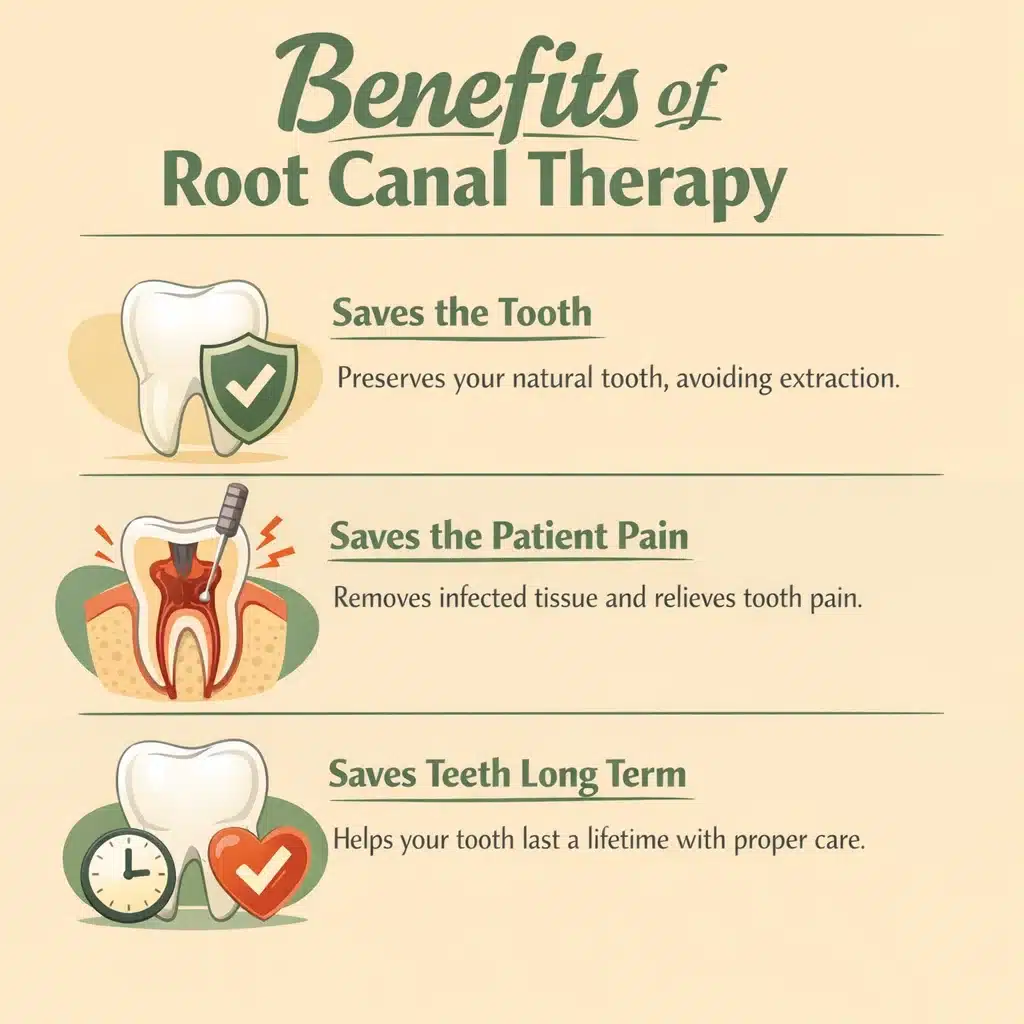
The main benefits of root canal therapy are as follows:
- Saves the Tooth: This treatment lets you keep your own tooth instead of needing an extraction and subsequent replacement.
- Saves the Patient Pain: This therapy allows the dentist to remove infected tissue from inside the tooth, thereby alleviating pain from the infection.
- Saves Teeth Long Term: A tooth that has had endodontic therapy should last a lifetime if properly maintained.
When Is a Root Canal Necessary?
If you are suffering from any of the following conditions, it is recommended that you schedule a consultation to get this treatment:
- Persistent toothache while chewing or applying pressure on it.
- Swollen, tender gums in proximity to the infected tooth.
- The appearance of the tooth may be darker than usual.
- The tooth is hypersensitive to extreme temperatures, even after the hot or cold food/drink is removed.
A dentist usually recommends this treatment when there is clear evidence of a pulp infection. An X-ray is usually taken to assess the damage to the tooth root.
What Happens During a Root Canal Therapy?
Root canal treatment is performed by a dentist and generally requires one or two visits, depending on the case. A brief overview of the process is as follows:
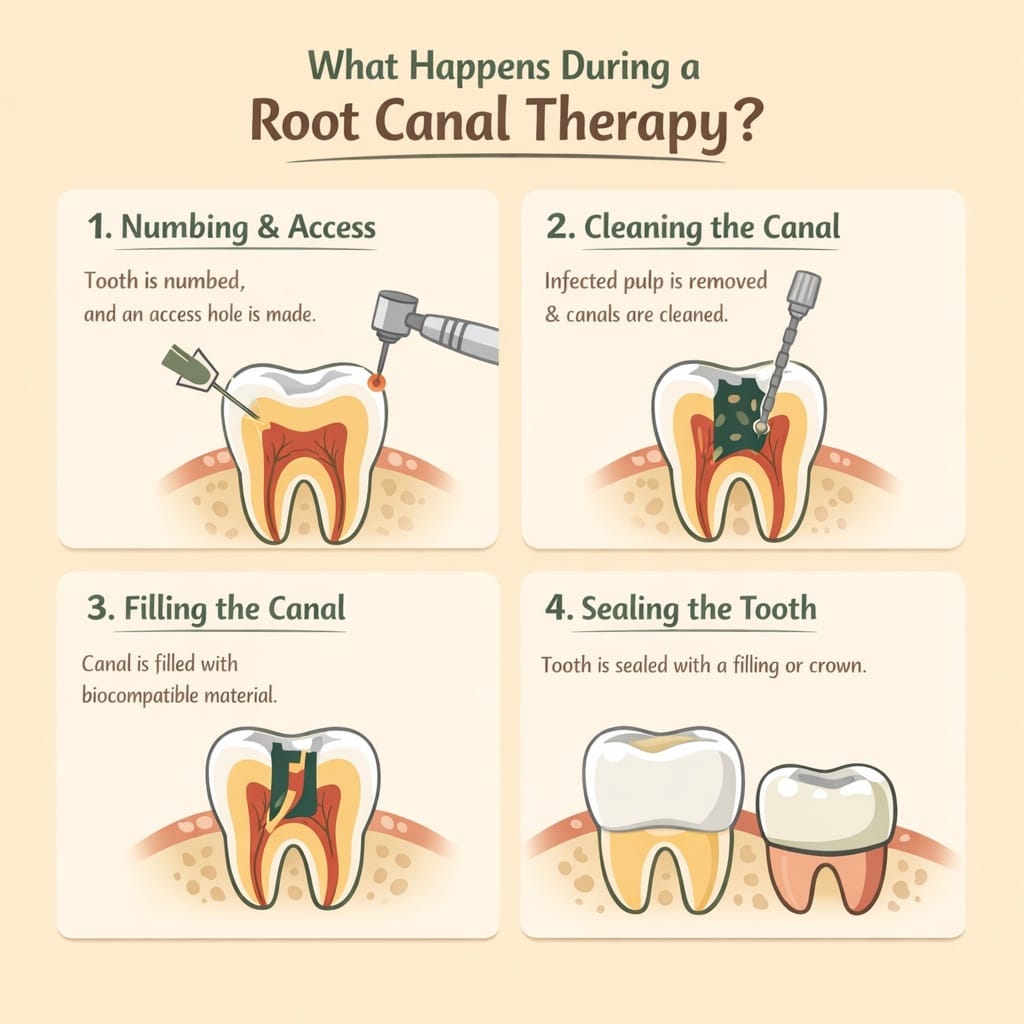
1. Numbing and preparation
The local anesthetic is first administered to the affected area of the tooth to ensure the patient is pain-free during the procedure. Then, a small hole is drilled in the top of the tooth to access the infection within the root canal.
2. Cleaning the root canal
The dentist will then remove the inflamed or infected pulp within the tooth using specialized dental equipment. This procedure often takes time because the dentist must ensure all infected tissue is removed from the root canal.
Following the removal of the pulp, the tooth root canal is then cleaned and shaped. A thoroughly cleaned root canal helps prevent subsequent infections.
3. Filling the root canal
Once cleaned, the canal is filled with gutta-percha, a rubber-like material that effectively seals the space, helps prevent future bacterial growth, and strengthens the tooth.
4. Sealing the tooth
The patient is then provided with a temporary filling, which is intended to cover the drilled hole in the tooth root. After a few days, the temporary filling is replaced with a permanent restoration, usually a filling or a crown, to provide strength and maintain the tooth’s appearance and functionality.
Root Canal Aftercare and Recovery
Following your endodontic therapy, it is advisable that you take the aftercare advice given by the dentist seriously. Most people will face slight pain or tenderness in the affected area for a few days after the procedure; this usually resolves easily with pain medication.
It is recommended that you avoid chewing on anything on the treated tooth until it has been completely restored. Additionally, following a proper daily oral hygiene routine, such as regular brushing and flossing, will help ensure that your treated tooth remains healthy for many years.
Why You Shouldn’t Delay a Root Canal
The longer a tooth infection goes untreated, the worse and more painful it gets (or may need to be removed). Endodontic therapy is a safe, conservative procedure that saves your tooth rather than requiring extraction.
Most people worry whether endodontic treatment is a painful procedure. In reality, most people report it is about the same as a routine filling. The pain associated with endodontic therapy is typically due to the infection. After the procedure, patients often feel an instant sense of pain relief.
Preserve Your Smile with Root Canal Therapy
If you are feeling acute pain or sensitivity in your tooth, you may benefit from endodontic therapy. This treatment helps to restore your health and eliminate your pain. Here at Boutique Smiles of Plantation, we offer caring service to ensure your dental well-being and make sure that your smile is as healthy and as bright as possible.
If you need root canal therapy in Plantation, give us a call today to schedule an appointment. Our team will be here to assist you at every point along the way.
Questions People Ask About Root Canal Therapy
1. Is root canal therapy painful?
While the idea of a root canal might sound painful, the procedure is typically not more uncomfortable than getting a regular filling. Local anesthesia ensures that the procedure is pain-free.
2. How long does a root canal procedure take?
The root canal process usually takes one to two hours, depending on the complexity of the case. Multiple visits may be necessary if the infection is severe.
3. How do I know if I need a root canal?
If you experience persistent tooth pain, sensitivity to temperature, or swelling in your gums, it may indicate an infection requiring a root canal. A dentist can diagnose the condition through a dental exam and X-ray.
4. Can a root canal fail?
Although rare, a root canal can fail if the infection returns or if the tooth is not sealed properly. Regular follow-up visits and good oral hygiene can help ensure its success.
5. What happens after a root canal?
After the procedure, most patients experience mild discomfort for a few days. Your dentist will likely recommend over-the-counter pain relievers and advise you to avoid chewing on the treated tooth until it is fully restored.
6. How can I care for my root canal-treated tooth?
To ensure the success of your root canal, maintain proper oral hygiene by brushing and flossing regularly. Avoid chewing on the treated tooth until it’s fully restored with a crown or filling.
Share this post
Related Posts

Your First Periodontal Visit: What to Expect and How to Prepare
Preparing for your first periodontal visit in Plantation? Learn what to expect at Boutique Smiles of Plantation with Dr. Alessandra Coelho. Book your appointment today!
Read More

Why Your Whole Family Should Trust One Sedation Dentist
Discover why Plantation families trust one sedation dentist for every member. Boutique Smiles of Plantation offers expert family dental care. Book your visit today!
Read More
5 Questions About Dental Bridges—Answered by Your Dentist
Have questions about dental bridges? Dr. Alessandra Coelho answers the 5 most common patient questions at Boutique Smiles of Plantation, FL. Book now!
Read More