




By February 9, 2026
Have you ever felt self-conscious about your smile due to missing teeth? Missing teeth can affect more than just your appearance. It can impact your ability to chew, speak clearly, and feel confident. The good news is that dental bridges can restore your smile and function. If you’re looking for a permanent solution to fill those gaps, you’re not alone!
At Boutique Smiles of Plantation, we specialize in offering dental bridge options that help you regain your full smile and the comfort of normal oral function. In this post, we’ll guide you through the best dental bridge options available, helping you find the perfect fit for your unique needs.
What Are Dental Bridges?
A dental bridge is a dental restoration used to replace one or more missing teeth. As the name suggests, it bridges the gap left by the missing tooth, providing both cosmetic and functional benefits. Dental bridges are made of high-quality materials, such as porcelain or metal, and are designed to blend seamlessly with your natural teeth.
Bridges work by anchoring artificial teeth to the adjacent natural teeth or implants, securing the gap and restoring your ability to chew and speak properly. For those with multiple missing teeth, bridges can be an ideal solution as they restore not only aesthetics but also the structural integrity of your bite.
Additionally, dental bridges can prevent surrounding teeth from shifting into the empty spaces left by missing teeth. This shift can cause alignment issues over time, leading to further dental problems.
At Boutique Smiles of Plantation, we understand that everyone’s dental needs are unique. Whether you’re considering a bridge to improve your smile or enhance your oral function, we’ll help you choose the right option tailored to your preferences and needs.
Different Types of Dental Bridges
When considering dental bridges, it’s important to understand that there are several types, each suited to different needs and circumstances. Here’s a breakdown of the most popular types of bridges:
Traditional Bridges
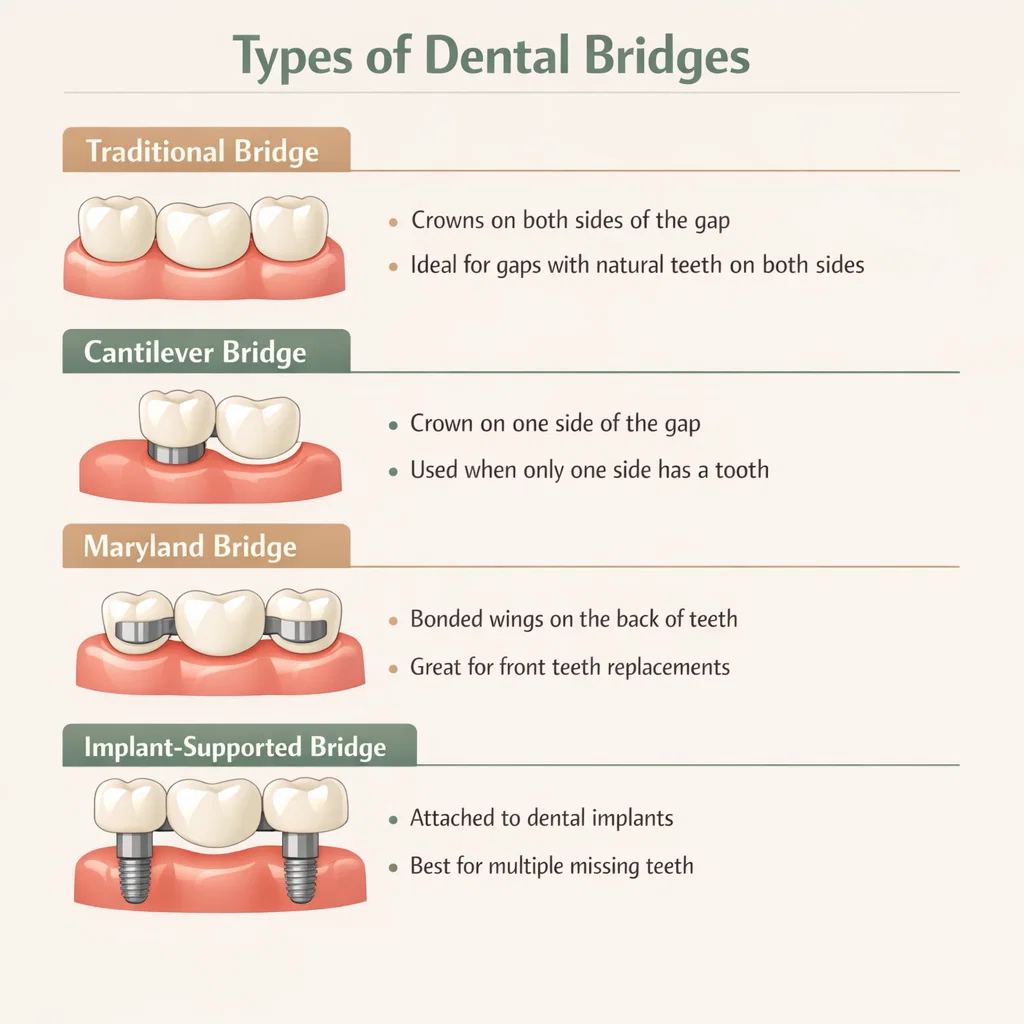
The most common type of dental bridge, traditional bridges consist of one or more artificial teeth (pontics) attached to crowns that are placed over the adjacent natural teeth. These bridges are ideal for people who have natural teeth on both sides of the gap. The crowns help support the pontics, providing stability and durability.
Traditional bridges are popular for their reliability and effectiveness in restoring both appearance and function. At Boutique Smiles of Plantation, we offer traditional bridges that are crafted to fit seamlessly with your natural teeth, providing a durable and long-lasting solution for your smile.
Cantilever Bridges
Cantilever bridges are used when there are natural teeth on only one side of the gap. Instead of placing crowns on both sides, this type of bridge is anchored to a single adjacent tooth. Cantilever bridges are often recommended when there are no teeth on the opposite side of the gap, such as in the case of a missing tooth along the side of the mouth.
These bridges provide a more affordable option for those who need a single tooth replacement. However, they may not be as durable as traditional bridges, especially when the missing tooth is under pressure from chewing or biting.
Maryland Bridges
Maryland bridges, also known as resin-bonded bridges, are typically used to replace missing teeth in the front of the mouth. This type of bridge uses a metal or porcelain framework that attaches to the adjacent teeth with wings. The wings are bonded to the back of the teeth, making it a minimally invasive option.
While Maryland bridges are a great choice for those who don’t want to alter the adjacent teeth significantly, they are best suited for replacing teeth that don’t experience heavy chewing forces, such as front teeth.
Implant-Supported Bridges
For the most secure and long-lasting option, implant-supported bridges utilize dental implants to anchor the bridge in place. This type of bridge is ideal for individuals who don’t have healthy adjacent teeth to support a traditional bridge. Dental implants are surgically placed into the jawbone and serve as the anchor for the bridge.
Implant-supported bridges provide superior stability, durability, and function. They also help preserve the jawbone, which can deteriorate when teeth are missing for long periods. While they are the most expensive option, many patients prefer them for their longevity and the natural feel they provide.
Factors to Consider When Choosing a Dental Bridge
Choosing the right dental bridge is a personal decision that depends on several factors. Here’s what you need to consider when making your choice:
Functionality
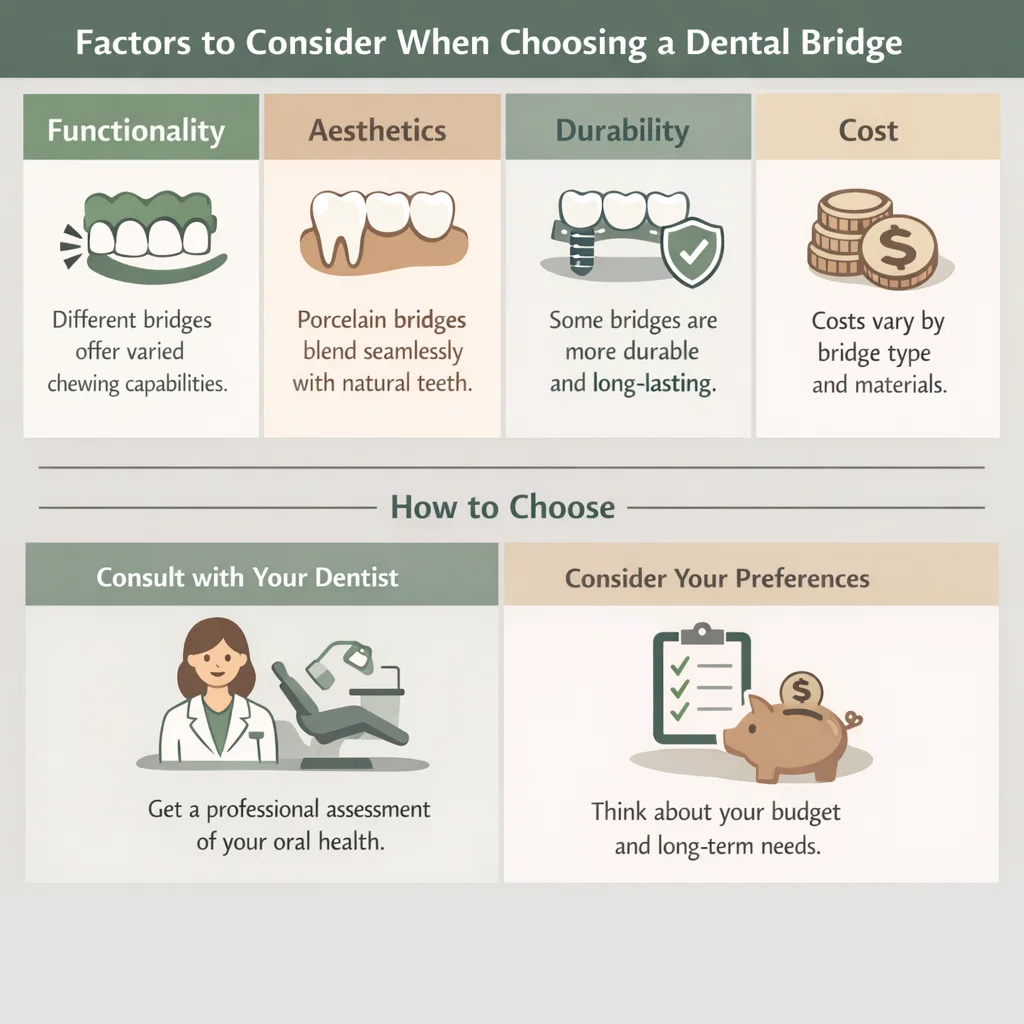
Each type of bridge restores functionality in different ways. For example, traditional and implant-supported bridges provide the most natural function for chewing and biting. On the other hand, cantilever and Maryland bridges might not withstand heavy chewing pressure as well, but they are effective for aesthetic purposes and less demanding functions.
Aesthetics
When it comes to aesthetics, porcelain bridges offer a more natural appearance. Traditional bridges made with porcelain or porcelain fused to metal are often used in visible areas of the mouth to ensure the artificial teeth blend seamlessly with natural teeth. Implant-supported bridges also offer excellent aesthetic benefits as they look and feel like natural teeth.
Durability
Traditional and implant-supported bridges are generally the most durable, lasting many years with proper care. Maryland bridges are less durable because they depend on bonding to natural teeth, which can weaken over time. Cantilever bridges, while useful in specific situations, may not last as long due to the added stress on the single anchor tooth.
Cost
The cost of a dental bridge varies based on the type and materials used. Traditional bridges tend to be more affordable than implant-supported bridges, but they also require healthy teeth to anchor the bridge. Implant-supported bridges, though more expensive, are a great long-term investment due to their durability and the added benefit of preventing bone loss.
At Boutique Smiles of Plantation, we provide a variety of options to meet both your functional and financial needs.
How to Choose the Right Dental Bridge for Your Smile
Choosing the best dental bridge requires a thoughtful approach. Here are two key steps to help you make the right decision:
Consult with Your Dentist
The first step in selecting a dental bridge is consulting with your dentist. At Boutique Smiles of Plantation, Dr. Alessandra Coelho and our professional team will assess your oral health, including the condition of your gums, teeth, and bone structure.
If you need an implant-supported bridge, we’ll ensure you have enough bone density to support the implant. Your dentist will also discuss which type of bridge is most suitable for your oral health and personal preferences.
Personal Preferences
Think about your lifestyle and budget. If you’re looking for a long-term solution, implant-supported bridges may be the best choice, especially if you don’t want to alter adjacent teeth.
If cost is a consideration, traditional or cantilever bridges might be more affordable while still providing solid results. Your dentist will help guide you through the decision process, ensuring that your choice fits your needs and goals.
Benefits of Dental Bridges
Dental bridges in Plantation offer numerous benefits beyond just restoring your smile. Here are some of the key advantages:
Improved Functionality
Bridges restore the ability to chew, bite, and speak clearly, giving you the confidence to eat your favorite foods without discomfort. Whether it’s a traditional or implant-supported bridge, you’ll enjoy improved functionality.
Aesthetic Enhancement
A dental bridge can dramatically improve the appearance of your smile. With options like porcelain bridges, you’ll have a solution that seamlessly blends with your natural teeth, giving you the confidence to smile brightly again.
Prevention of Other Dental Issues
Bridges also help prevent other dental problems. By filling the gap left by missing teeth, dental bridges prevent remaining teeth from shifting into the space, preserving your bite alignment and preventing potential misalignment.
In conclusion, finding the best dental bridge for your smile depends on various factors such as function, aesthetics, durability, and cost. Whether you’re considering a traditional bridge, a cantilever bridge, or an implant-supported bridge, the key is working closely with your dentist to determine the best option for your oral health needs.
At Boutique Smiles of Plantation, we are committed to providing personalized, high-quality dental care to ensure you leave with a smile that lasts a lifetime.
Schedule your consultation today to discuss the perfect dental bridge solution for your smile!
Frequently Asked Questions
How long do dental bridges last?
Dental bridges typically last 5 to 15 years, depending on the type of bridge and how well you care for them. Regular dental checkups help ensure their longevity.
Can I get a dental bridge if I don’t have adjacent teeth?
Yes, implant-supported bridges are an ideal solution when you don’t have natural teeth on both sides of the gap. Dental implants anchor the bridge securely.
Can I eat normally with a dental bridge?
Yes, dental bridges restore your ability to chew and eat normally. However, it’s best to avoid extremely hard or sticky foods to prolong the life of the bridge.
Share this post
Related Posts

Dental Implants for Multiple Missing Teeth: Options and Benefits
Missing more than one tooth can affect more than just your smile—it can change the way you eat, speak, and feel about yourself. If you’re in Plantation and dealing with multiple missing teeth, you’re not alone—and more importantly, you have excellent solutions available right here at Boutique Smiles of Plantation. Let’s walk through your options and why dental implants are
Read More

How Cosmetic Dentistry Can Correct Uneven or Gapped Teeth
Are you feeling self-conscious about your uneven teeth or gaps in your smile? Do you feel like your smile doesn’t capture the real you? Many people are self-conscious about dental issues that can affect not only their smile but also their overall confidence. Thankfully, with cosmetic dentistry, you can get the smile you’ve always dreamed of. Here, we’ll look at
Read More

5 Lasting Benefits of Choosing Invisalign for Your Smile
A confident smile can open doors, boost your self-esteem, and leave a lasting impression. If you’ve been considering straightening your teeth, you might have noticed that Invisalign has become the go-to choice for adults and teens alike. Unlike traditional braces, Invisalign uses clear, removable aligners that are both discreet and effective. At Boutique Smiles of Plantation, we’ve helped countless patients
Read More