




By April 15, 2026
Throbbing tooth pain has a way of demanding your full attention. It doesn’t fade into the background the way other discomforts do – it pulses, it builds, and it makes it almost impossible to focus on anything else. Whether it started as a dull ache that gradually worsened or struck suddenly after eating something cold, that kind of pain is your body’s way of signaling that something is wrong inside the tooth.
This blog covers why throbbing nerve pain happens, what you can do to reduce it while you wait for treatment, and the warning signs that mean you need to act the same day rather than wait for a routine appointment. Some tooth pain can wait a week. This kind usually cannot.
What Causes Throbbing Nerve Pain in a Tooth
The throbbing sensation is almost always associated with inflammation or infection of the dental pulp (the soft tissue at the center of your tooth that contains blood vessels, connective tissue, and nerve fibers). Unlike the hard outer layers of a tooth, the pulp is enclosed in an enclosed space with no room to swell. That containment is what creates the intense, pulsing pressure you feel.
The most common causes include deep tooth decay that has reached the pulp, a cracked tooth that allows bacteria to penetrate the inner layers, a dental abscess (a pocket of infection that forms at the root tip or in the surrounding gum tissue), and sometimes a trauma-stricken dying tooth. Any of these can escalate quickly. An emergency dentist can determine which of these is driving your pain and start treatment before the infection spreads beyond the tooth. At Boutique Smiles of Plantation, the team sees patients experiencing this kind of pain regularly and understands how disorienting it can be.
Temporary Relief While You Wait for Treatment
Getting to a dentist is the only real solution for nerve pain, but while you’re waiting for your appointment, there are ways to make the next few hours more manageable. These measures temporarily reduce pain; they don’t address the underlying problem.
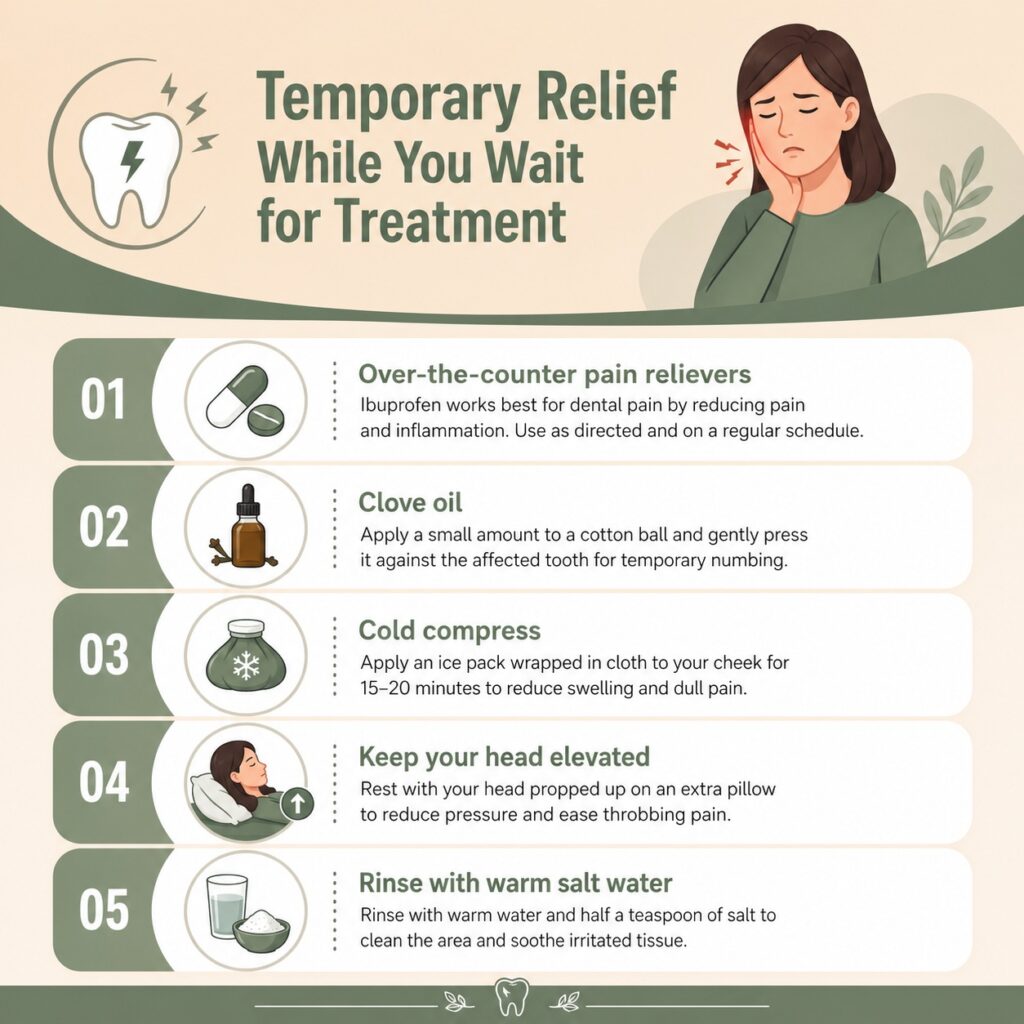
Over-the-counter pain relievers
Ibuprofen (Advil, Motrin) is generally more effective for dental pain than acetaminophen because it reduces both pain and the inflammation driving the pressure inside the tooth. Take it at the recommended dose and on a consistent schedule rather than waiting for the pain to peak before taking another dose. If you can’t take NSAIDs due to a health condition, acetaminophen is a suitable alternative. Do not place aspirin directly on the tooth or gum – this causes chemical burns to the soft tissue.
Clove oil
Clove oil contains eugenol, a compound with natural analgesic and antibacterial properties that has been used in dentistry for over a century. Applying a small amount to a cotton ball and pressing it gently against the affected tooth provides temporary numbing. Use it sparingly – eugenol in concentrated form can irritate gum tissue if overused.
Cold compress
Applying an ice pack wrapped in cloth to the outside of your cheek for 15 to 20 minutes helps constrict blood vessels, reduce swelling, and temporarily dull the pain signal. Do not apply heat – warmth increases blood flow to an already inflamed area and typically worsens the throbbing.
Keep your head elevated
Lying flat increases blood pressure in the head, which can intensify pulsing nerve pain. Sleeping or resting with your head propped up on an extra pillow reduces that pressure and often makes the pain noticeably more tolerable at night.
Rinse with warm salt water
A gentle rinse with warm water and a half-teaspoon of salt helps reduce oral bacteria and can soothe inflamed tissue around the tooth. It won’t fix the underlying issue, but it keeps the area clean and provides mild relief without risking tissue damage.
Warning Signs You Should Not Wait Out
Some tooth pain can be monitored for a day or two. Throbbing nerve pain accompanied by any of the following requires same-day dental attention or, in severe cases, a trip to the emergency room if no dental office is available:
- Facial swelling, particularly around the jaw, cheek, or below the eye
- Fever above 101°F, which suggests the infection has moved beyond the tooth
- Difficulty swallowing or breathing – signs the infection may be tracking toward the airway
- Pain so severe that over-the-counter medication provides no relief at all
- A visible pimple-like bump on the gum near the painful tooth, which indicates an abscess
A dental abscess is a bacterial infection, and unlike most other infections, it will not resolve on its own without treatment. If left untreated, it can spread to surrounding teeth, the jawbone, and, in rare but serious cases, the neck and chest. This isn’t meant to alarm you – it’s meant to help you take the right steps quickly.
What a Dentist Does for Throbbing Tooth Pain
Once a dentist examines the tooth and takes X-rays to assess the extent of pulp involvement, the treatment path becomes clear. The two most common approaches are root canal therapy and extraction, depending on how much tooth structure remains and whether the tooth is restorable.
Root canal therapy removes the infected or inflamed pulp tissue, cleans and shapes the canal system, and seals it to prevent reinfection. A crown is typically placed afterward to protect the treated tooth. Despite its reputation, a properly performed root canal relieves the pain – it doesn’t cause it. Most patients report that the procedure feels similar to getting a filling.
Extraction removes the tooth entirely and is sometimes the right choice when the tooth is too damaged to save or when the patient prefers a simpler resolution. Your dentist will discuss replacement options (implants or bridges) to prevent the gap from causing additional problems over time.
Dental Emergencies in Plantation, FL
Plantation and the surrounding Broward County area are home to many working adults and families who don’t always have time to wait days for an appointment when something goes wrong. Boutique Smiles of Plantation offers same-day availability for patients dealing with dental pain, and the team approaches every emergency with genuine care rather than urgency for its own sake. Whether you’re coming in from University Drive, Peters Road, or anywhere else in the area, an emergency dentist who listens carefully and diagnoses accurately makes the difference between fast relief and unnecessary treatment. Boutique Smiles of Plantation is that kind of practice.
Don’t let nerve pain ruin your day.Call Boutique Smiles of Plantation today or book online for same-day emergency care. The team will assess your pain, identify the source, and help you relieve discomfort as quickly as possible, with honest guidance every step of the way.
People Also Ask
Can a throbbing tooth heal on its own without treatment?
No. Throbbing pain caused by pulp inflammation or infection won’t resolve without dental treatment. Pain may come and go as nerve tissue dies, but the infection continues spreading. Delaying care leads to more extensive and more costly treatment down the line.
Can antibiotics cure a dental abscess without seeing a dentist?
Antibiotics reduce the bacterial load and may temporarily decrease swelling and pain, but they cannot clear the infection from inside the tooth or drain an abscess. Dental treatment (root canal therapy or extraction) is still required to completely resolve the source of infection.
Why does tooth pain get worse at night?
Lying down increases blood flow to the head, which raises pressure in already-inflamed tissue around the tooth. The lack of daytime distractions also makes pain feel more intense at night. Keeping your head elevated and taking ibuprofen before bed can help manage nighttime discomfort.
Is tooth nerve pain always a sign of infection?
Not always. Exposed dentin from gum recession or enamel erosion can cause sharp nerve sensitivity to temperature without infection. However, throbbing pain indicates pulp inflammation or infection that needs professional evaluation.
Share this post
Related Posts

Your First Periodontal Visit: What to Expect and How to Prepare
Preparing for your first periodontal visit in Plantation? Learn what to expect at Boutique Smiles of Plantation with Dr. Alessandra Coelho. Book your appointment today!
Read More

Why Your Whole Family Should Trust One Sedation Dentist
Discover why Plantation families trust one sedation dentist for every member. Boutique Smiles of Plantation offers expert family dental care. Book your visit today!
Read More
5 Questions About Dental Bridges—Answered by Your Dentist
Have questions about dental bridges? Dr. Alessandra Coelho answers the 5 most common patient questions at Boutique Smiles of Plantation, FL. Book now!
Read More